A Worthy Weep: a Memoir-ic Reflection on Paul Kalanithi’s When Breath Becomes Air
On the whole, it’s probably wise that we as a culture have drifted away from the granite-like male sentiment that ‘real men don’t cry.’ Men can cry. That’s cool.
But that being said, as a man, I tend to shy away from a good, hearty cry. Call me old fashioned. As a six-foot-four male who weighs about the same as an adult black bear, I prefer a more stoic attitude toward life. It is no simple task to get these waterfalls gushing. But were you to walk into my Traber dorm room on one blustery January morning, you would find me strewn across a couch, a very recently read copy of When Breath Becomes Air sat ajar on my lap, looking as if I’d somehow mixed up my eyedrops with Jalapeño juice. I haven’t cried that much since Avengers: Endgame.
Poetry is an important, kaleidoscopic genre of literature and worship, but some still find it to be an impenetrable artform. Many Christian students desire to faithfully engage with creative outlets, but get stuck when it comes to understanding meter or metaphor. How might these intricate texts become digestible? There are a few central ways to consider poetry we shall explore below in order to feel more confident approaching it: neighborly welcome, unhurried altruism, and sincere attention.
“It is a heretic that makes the fire, not she who burns in it.”
William Shakespeare
This August, the Wheaton College Arena Theatre produced William Shakespeare’s The Winter’s Tale for their annual Shakespeare in the Park performance. This line encapsulates the beauty and heartbreak that was at the core of Arena’s production. While sitting on a blanket as the sky darkened, the air crisped, and the rain began to fall, I became increasingly aware of how similar King Leontes and I are. While I have never wrongly accused anyone of adultery and sentenced them to death, Leontes and I are both sinners tempted to listen to the lies of the evil one.
Watching this performance was my first experience with The Winter’s Tale. I was delighted to discover that, at its core, this play is a study in sin, and an accurate account of the way our imaginations can breed sinful thoughts. From the beginning of the play, Leontes, King of Scilia, is quickly taken captive by his insecurities. He is easily convinced that his wife, Queen Hermione, is cheating on him, when she engages in conversation with another man of status. However, in the show, Hermione is portrayed as a strong, respectable woman. She is adored by her ladies in waiting and others in the kingdom. Afterall, she is “the daughter of a king, and the mother of a prince.” Leontes’s doubts are all in his head–his imagination running wild and his distrust spreading like a disease, the infection of sin. He leads from a throne of pride and jealousy and puts himself at the center of the narrative, as if he has all the answers, knows what is true, and is the only one who could be right.
The characters’ costumes, aptly designed by Arena Theatre, emphasize the distinction between the holy and the broken. Queen Hermione is dressed in pure white, symbolizing her honor and goodness. Her blonde hair falls off her shoulders in waves like a halo. She is the picture of an angel in this show. On the other hand, Leontes is dressed in all dark garments, symbolizing the darkness that has polluted his heart. He is sin-sick, wounding his wife out of doubt and fear.
Another interesting symbol that Shakespeare uses is the character Perdita. Perdita is the daughter of Leontes and Hermionie. Out of a fear of unfaithfulness and illegitimacy, Leontes has his newborn daughter, his princess, cast aside and abandoned in the woods. She is adopted by a shepherd and his family. Perdita, like a lost lamb, is rescued and cared for as one of the flock. The child who once was lost, now is found. And her savior is her father, the shepherd who rescued her from death. She was adopted into his family as we are adopted into God’s.
Additionally, Perdita’s return to Sicilia, after sixteen years, leads to the reconciliation of the broken kingdom. She is able to provide something that no one else in the play can: forgiveness. No matter how long Leontes lived in sorrow or beat his breast, he could never absolve himself of his misdeeds. Forgiveness can only be achieved through an outside party. Only Perdita has the power to forgive her father of the wrongs he committed against her. Leontes, the prodigal son of this play, finds his way back to his family after a life of misery and shame. Begging his wife and child for forgiveness, Leontes finds rest in their reconciliation and his life is redeemed!
Is this not the story of all of us? We were dead in our trespasses and enemies of the almighty God. Just as Leontes scorned Perdita, so did we scorn God. There was nothing we could do to save ourselves or to grant ourselves some kind of forgiveness–no, that power belongs to God and God alone. God reconciled our lives, calling us to him, and restored us through his redemptive love. How blessed we are that our father is much different than Leontes. Our father will never abandon us. He will not leave us nor forsake us.
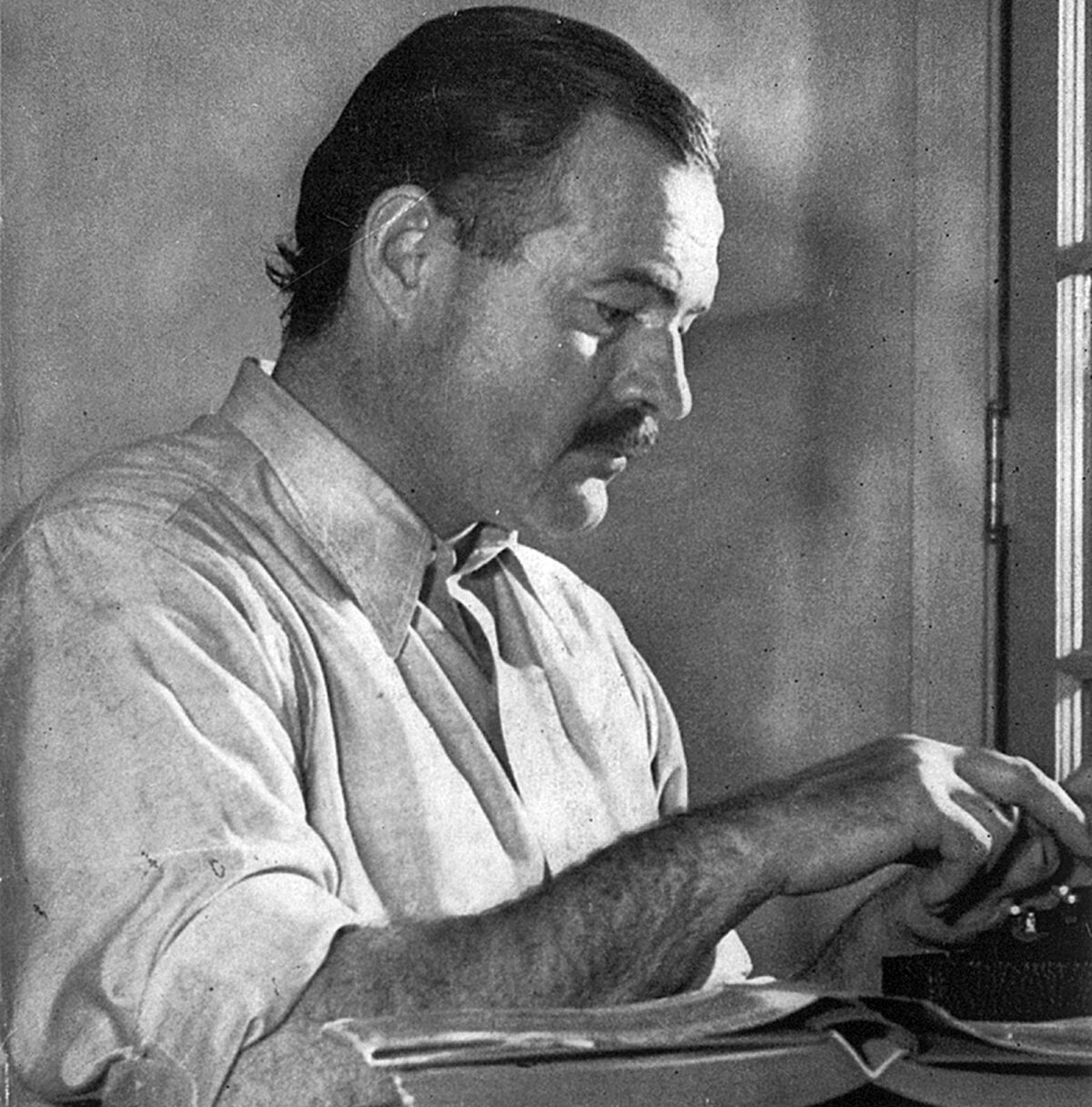
In 1952, Ernest Hemingway published a novella titled The Old Man and the Sea. This novella won the Pulitzer Prize for fiction and helped Hemingway win the Nobel Prize for literature in 1954. What is it about this simple eighty-page narrative that makes it so compelling?
In my experience, no writing process is linear—in fact, it’s far more likely that the product of your written efforts will take a life of its own as words come together on the page. And though I will not deny that some people, after a sleepless night and caffeine overconsumption, can crank out a five-page research paper in three hours, my writing process requires a lot of flexibility of thought.
In my three years as a Blog Editor with the Writing Center, I’ve collaborated with writers on a variety of article genres: opinion-based pieces, reflections, book reviews, interviews, how-to guides, and more. And, as a seasoned editor of blog posts, I’ve seen just how complex this style of writing can be.
Here at the Writing Center, we consultants have the pleasure of working with writers on many academic assignments throughout the year. We are always ready to welcome any kind of academic paper and collaborate with writers, whether that is because a professor has required a consultation, a student feels in need of guidance, or a client wants a listening ear for their ideas. Perhaps you have brought a research paper or two to the Writing Center before.
We’ve all been there. The essay has been on the syllabus since day one. Ten days before it’s due, the professor starts sneaking in comments every few classes about the turn-in date. We tell ourselves, “Oh, there’s still time.” Why is it so hard to get started?
I remember sitting in front of my laptop, searching, “How to be a good manager.” Not only was the title of “manager” itself contributing to my fear of the role, but self-doubts began to rise in my mind. Would I be able to live up to our staff members’ expectations? Would my lack of experience in such a position decrease the Writing Center’s professionalism? Despite the weeks of training I received, these thoughts lingered as I walked into my first day as the Student Manager. Yet now, as I sit reminiscing over the past year that I have spent working in this role, I can see only blessings and lessons to share.
First Year Seminar (CORE 101), First Year Writing, and AIS professors often include Writing Center appointments as a portion of their course. You might meet this with a feeling of dread or stress; life is hectic and having yet another required meeting or appointment can feel like an added weight. You may feel like you don’t “need” to go to the Writing Center or the idea of sharing your work with an unfamiliar face may feel daunting. So, how do you make the best of it?